TRANSPARENT PRICING
Choose Your
Discovery Path
From essential ancestry reports to fully customizable advanced analysis — find the plan that matches your research depth.
Start Your Discovery
Basic
Everything you need to begin exploring your Carpathian roots with core genetic analysis tools.
- Ancestry Report
- Closest Population Matches
- Access to G25 Calculators
- AI Assistant
- Heat Maps
- PCA Plot
- Ancestry Treegram
- G25 Coordinates for Calculators
- Fully Customizable Advanced Report
- Manual Population Adjustments
Deep Ancestry Insights
Premium
Unlock heat maps, PCA plots, treegrams, and G25 coordinates for a richer, more detailed picture of your genetic heritage.
- Ancestry Report
- Closest Population Matches
- Access to G25 Calculators
- AI Assistant
- Heat Maps
- PCA Plot
- Ancestry Treegram
- G25 Coordinates for Calculators
- Fully Customizable Advanced Report
- Manual Population Adjustments
Full Control & Precision
Premium Plus
The complete Marleka experience — every feature unlocked, including full manual customization of your advanced report.
- Ancestry Report
- Closest Population Matches
- Access to G25 Calculators
- AI Assistant
- Heat Maps
- PCA Plot
- Ancestry Treegram
- G25 Coordinates for Calculators
- Fully Customizable Advanced Report
- Manual Population Adjustments
All plans are one-time purchases. No subscriptions. No hidden fees.
Full Feature Comparison
See exactly what's included in each plan
Basic
$30
Premium
$40 · Most Popular
Premium Plus
$45 · Best Features
WHAT YOU'LL RECEIVE
See a Sample Report
This is exactly what your Premium Plus report looks like — complete with AI narrative, ancestry breakdown, genetic maps, and closest population matches.
Advanced Ancestry
DNA Report
Comprehensive genetic ancestry analysis powered by Global25 coordinates
Sample ID
Sample — Carpathian Heritage
Distance Metric
euclidean
Fit Quality
Excellent
98.2%
Fit Score
10
Components
0.0182
Distance
AI ANCESTRY ANALYSIS
Powered by Professor Misha™ · Genetic Intelligence Engine

Prof. Misha
AI Analyst
🐾 "I've completed the genetic analysis for Sample — Carpathian Heritage. Here's what your DNA reveals!"
The genetic profile for Sample — Carpathian Heritage tells a story with one unmistakable headline: a powerful and deeply rooted Carpathian Rusyn ancestry. When all Rusyn sub-populations are combined — Rusyn (28.4%), Lemko_Poland (18.7%), Boyko (12.1%), Hutsul (5.8%), Dolinyan (2.5%), Pannonian-Rusyn (1.5%) — the total Carpathian Rusyn component reaches 69.0%, making it by far the single most defining genetic signal in this entire profile. The Rusyns, Lemkos, Boykos, Hutsuls, and Dolinyans are the indigenous Slavic highlanders of the Eastern Carpathian arc — one of the most genetically cohesive and geographically isolated populations in all of Central Europe, with roots predating the medieval Slavic expansion.
A combined 69.0% Carpathian Rusyn ancestry is a rare and extraordinary genetic signature. Individuals with this level of Rusyn heritage are genetically traceable to one of the most ancient and isolated mountain communities in Europe — the highland valleys of northeastern Slovakia, western Ukraine, and southeastern Poland. The secondary signal — 23.8% Eastern European — provides important context: Eastern European populations span the vast plains and river valleys from Poland and the Czech lands through Ukraine, Moldova, and Romania. Their DNA reflects deep Slavic roots shaped by medieval kingdoms, Cossack migrations, and centuries of demographic exchange.
The remaining ancestry — 10.3% Slovak, 8.9% Polish_Podkarpackie, 7.2% Ukrainian_Zakarpattia, 4.6% Czechia-Prague — rounds out a profile shaped by historical population movements across the Carpathian basin and broader Central Europe. But the defining story here is clear: with 69.0% combined Carpathian Rusyn ancestry, this individual carries one of the most distinctive and historically significant genetic signatures in all of European population genetics.
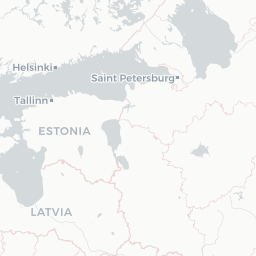
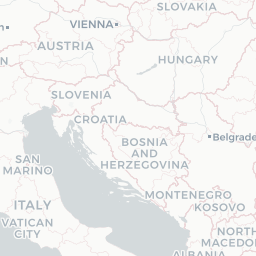
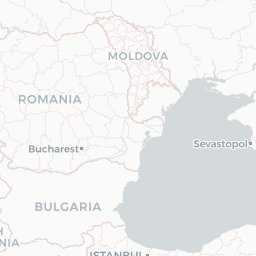
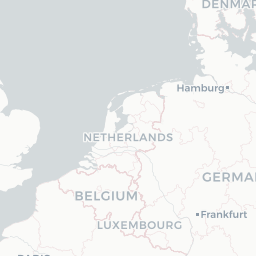
Ancestral Origins Map
Geographic origins of Sample — Carpathian Heritage genetic ancestry
10
Regions Mapped
100%
Ancestry Plotted


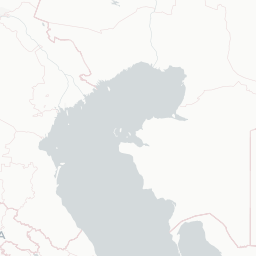
Ancestral Regions
Circle size = ancestry %
Ancestry Composition
Your genetic makeup broken down by regional group
Carpathian Rusyn
The Rusyns, Lemkos, Boyko, Hutsul, and Dolinyan are mountain peoples who have lived in the Carpathian highlands for thousands of years. They are one of the oldest surviving communities in Eastern Europe, with a unique culture, language, and genetic identity that sets them apart from their neighbors.
The Rusyns (also called Ruthenians, Carpatho-Rusyns, or historically Rutheni) are the indigenous Slavic people of the Eastern Carpathian mountain arc, with their historical heartland spanning four modern countries: the Prešov Region (Subcarpathian Ruthenia) of northeastern Slovakia, Zakarpattia Oblast of western Ukraine, the Lemko and Boyko regions of southeastern Poland (Galicia), and the Maramureș/Bucovina borderlands of northern Romania. They are one of the least-assimilated Slavic peoples in Europe, with a distinct identity that has survived successive rulerships under the Kingdom of Hungary, Habsburg Austria, Czechoslovakia, and Soviet Ukraine without full absorption into any neighboring national identity. Three historical forces shaped the Rusyn genetic and cultural profile in profound ways: **White Croat Origin.** The scholarly and genetic consensus increasingly supports the Rusyns as the direct descendants of the White Croats (Bijeli Hrvati / Bílí Chorvati) — the northern Slavic tribal confederation whose homeland sat in exactly the Rusyn ethnographic zone: the northern Carpathian arc from the Tatras east through Subcarpathia. When a portion of the White Croats migrated south in the 7th century to become Dalmatian/Pannonian Croats, those who remained in the Carpathians evolved into the Rusyn/Ruthenian ethnic group. The White Croat homeland corresponds almost exactly with the Rusyn ethnographic zone: the Lemko region of the western Carpathians, the Prešov Region of eastern Slovakia, Subcarpathian Ruthenia (Zakarpattia), and the Boyko and Hutsul zones of the Eastern Carpathians. Genetically, White Croat samples display a distinctive North Carpathian profile: elevated East Slavic/Carpathian Ukrainian affinity, a strong West Slavic Czech-Slovak component from Carpathian proximity, and notably reduced Dinaric/Balkan signals compared to Dalmatian or Slavonian Croats. This Carpathian North Slavic ancestry profile is the ancestral genetic baseline from which both modern Rusyns and Croats ultimately descend.
The Lemkos are the westernmost Rusyn subgroup, historically inhabiting the Low Beskid mountains from the Poprad river in southeastern Poland westward into northeastern Slovakia. Of all Carpatho-Rusyn groups, Lemkos show the strongest genetic affinity to West Slavic populations — in G25 PCA space they cluster notably close to Czechs, Moravians, and Slovaks, a clear reflection of their position at the western extreme of the Carpathian arc where the Rusyn ethnographic zone meets the Slovak and Polish linguistic frontiers. This Czech/Slovak proximity is one of the key features that visually distinguishes the Lemko cluster from Boykos and Hutsuls on admixture plots. A second distinctive signal is a detectable Romanian/Vlach-adjacent component, a legacy of the 14th–17th century Wallachian colonization (Walachian migration wave) that moved northward through the Carpathians, introducing a Romanian-proximate genetic trace into the western Beskids — the same shepherd migration corridor that left comparable signals in Maramureș and the Hutsul zone. Lemkos thus occupy a unique crossroads: overwhelmingly Rusyn in their East Slavic Carpathian core, yet measurably West Slavic-adjacent in a way no other Rusyn subgroup is, and carrying a faint Vlach thread that ties them southward to the Carpathian Wallachian world.
The Boykos are the central Carpathian Rusyn subgroup, inhabiting the Bieszczady and Eastern Beskid mountains straddling southeastern Poland and western Ukraine (Lviv, Ivano-Frankivsk, and Zakarpattia oblasts). Genetically, the Boyko profile sits at the midpoint of the Rusyn east–west cline: more East Slavic-shifted than Lemkos, but less so than Hutsuls. The Boyko zone borders Galician Ukrainian territories to the north and east, and this contact is genetically visible — Boykos show measurably elevated Ukrainian/Galician admixture relative to Lemkos, with a West Ukrainian genetic pull that does not appear in the western Beskids. On PCA plots Boykos occupy a position intermediate between the Slovak/Czech-proximate Lemko cluster and the distinctly Ukrainian-trending Hutsul cluster, making them a useful reference for tracing the Carpathian Rusyn genetic gradient from west to east. A possible pre-Slavic Iron Age Celtic/Dacian substrate has been proposed for this zone, as the central Carpathian region was within the Hallstatt and La Tène cultural sphere before Slavic settlement, but this signal is subtle and partially obscured by the dominant medieval Slavic demographic replacement.
The Hutsuls are the easternmost and highest-altitude Rusyn subgroup, inhabiting the Chornohora massif, Gorgany range, and Bucovina highlands across Ivano-Frankivsk and Chernivtsi oblasts of Ukraine and extending into Suceava County in northern Romania. Of all Rusyn groups, the Hutsul genetic profile is the most East-shifted: it sits closest to Galician and Carpathian Ukrainians on PCA plots, reflecting centuries of proximity and admixture with Ukrainian populations to the north and east. The second defining feature is a measurable Romanian/Vlach component that distinguishes Hutsuls from Boykos — the Hutsul ethnographic zone straddles the Ukraine–Romania border, and the Wallachian colonization routes that moved through the Carpathians in the 14th–17th centuries brought Romanian-proximate ancestry into Hutsul villages, a signal that increases toward the Bucovina and Maramureș frontier. The Hutsul profile therefore represents the deepest shift along the Rusyn genetic gradient: West Slavic-adjacent (Lemko) → central/intermediate (Boyko) → most East Slavic and most Romanian-proximate (Hutsul). Their relative isolation in high mountain villages — many above 1,000 to 1,500 metres — has also helped preserve an unusually cohesive ancient Steppe + EEF + WHG ratio with less disruption from medieval lowland population movements.
The Dolinyans (literally 'valley people', from Ukrainian dolyna — valley) are the lowland Rusyn communities of the Transcarpathian (Zakarpattia) foothills and river valleys below the highland Boyko and Hutsul zones. Their genetic profile is the most Pannonian-shifted of all Rusyn subgroups, a direct consequence of centuries of settlement in the Tisza valley plain under the Kingdom of Hungary. Unlike highland Rusyns whose mountain isolation limited external admixture, Dolinyans lived in mixed lowland communities alongside Hungarians, Slovaks, and Germans, and this contact is genetically visible: on PCA plots the Dolinyan cluster shifts noticeably toward Hungarians and Pannonian Slovaks relative to highland groups, while retaining the core East Slavic/Carpathian Rusyn baseline that separates them from true Pannonian populations. A faint South Slavic (Pannonian Croat/Serb) admixture from the Pannonian Plain frontier is also detectable. The Dolinyan profile effectively bridges the highland Carpathian Rusyn world and the Pannonian Basin, making them the most genetically accessible entry point for individuals whose Rusyn ancestry comes via the lowland Transcarpathian settlements rather than the remote mountain villages.
Pannonian Rusyns are the most geographically displaced Rusyn subgroup — descended from Carpathian highlanders who undertook a deliberate southward migration in the 18th century, settling hundreds of kilometers from their mountain homeland in the flat Pannonian Plain. The migration occurred in two primary waves: the first and largest in 1745–1751, when Rusyn families from Zemplín and Šariš counties (northeastern Slovakia, Prešov Region) accepted colonization offers from the Habsburg administration and Serbian Patriarch Arsenije IV, settling in the Bačka region of northern Serbia (then Austrian military frontier); a second wave followed in subsequent decades into Slavonia (modern Croatia). Today the Pannonian Rusyn population is concentrated primarily in Vojvodina (Serbia) — with the town of Ruský Kerestur (Руски Керестур) as their undisputed cultural capital — and in eastern Slavonia (Croatia), with diaspora communities in North America (particularly Ontario, Canada and Pennsylvania/New Jersey, USA). Pannonian Rusyns are the only Rusyn group that never lived under Soviet rule, and their relative institutional stability in Yugoslavia allowed them to develop the only standardized Rusyn literary language (Pannonian Rusyn / Bachka Rusyn, codified in 1923), separate from the Carpathian Rusyn literary standards developed in Slovakia and Ukraine. **Genetic Profile.** The Pannonian Rusyn sample represents a measurable genetic departure from highland Carpathian Rusyns. The Carpathian core — the North Slavic Corded Ware/Steppe baseline, Carpathian East Slavic affinity, and the faint West Slavic Czech-Slovak component — remains the ancestral foundation, but 270+ years of settlement in the Pannonian Plain have introduced layered admixture absent in mountain Rusyns: a pronounced South Slavic (Serbian/Croatian) component from coexistence with Bunjevci, Šokci, and Pannonian Serb communities in Bačka; a Pannonian Hungarian component from the Hungarian demographic presence across the region; and a faint Carpathian German (Danube Swabian) signal from the 18th century Habsburg colonization of Vojvodina, which settled German communities alongside Rusyn settlers in the same villages. On PCA, the Pannonian Rusyn cluster shifts distinctly southward from the Carpathian Rusyn position — toward South Slavic (Serbian/Croatian) and Pannonian Hungarian space — while remaining clearly separable from true South Slavic or Hungarian populations by the retained Carpathian North Slavic baseline. They represent genetically what they are historically: a Carpathian highland population that was transplanted to the southern plain and spent nearly three centuries absorbing its neighbors.
Eastern European
Eastern European populations span the vast plains and river valleys from Poland and the Czech lands through Ukraine, Moldova, and Romania. Their DNA reflects deep Slavic roots shaped by medieval kingdoms, Cossack migrations, and centuries of demographic exchange.
Slovakia Lemkos are the Lemko communities of eastern Slovakia, sharing the distinctive Rusyn genetic profile of the western Carpathian arc. Their genetic profile mirrors the broader Lemko signature — strong West Slavic (Czech/Slovak) proximity relative to other Rusyn groups — but with an additional layer of Slovak admixture from centuries of coexistence with Slovak-speaking communities in the Prešov lowlands. The Slovakia Lemko sample typically shows the highest Slovak genetic affinity of any Rusyn sub-population, sitting closest to eastern Slovaks (particularly Šariš and Zemplín districts) on PCA plots while retaining the core Rusyn Carpathian East Slavic baseline. The Akcja Wisła deportation of 1947 affected primarily Polish Lemkos, leaving the Slovakia Lemko community less demographically disrupted, which contributes to the relative genetic cohesion of this sample.
Podkarpackie (Subcarpathian Voivodeship; Polish: Województwo Podkarpackie) is the southeastern corner of Poland — the region that borders Ukraine to the east, Slovakia to the south, and the Carpathian mountain arc to the south and southeast. It is one of the most historically significant and genetically distinctive regions in all of Poland, sitting at the precise crossroads of the Polish, Ukrainian/Ruthenian, and Carpathian Rusyn ethnographic worlds. The region encompasses the historic lands of Red Ruthenia (Czerwona Ruś) and the eastern reaches of Lesser Poland (Małopolska), including the cities of Rzeszów, Przemyśl, Krosno, and Sanok. Genetically, Polish_Podkarpackie is the most East Slavic-shifted and Carpathian-proximate of all Polish regional populations — a direct reflection of its geographic and demographic position at the Polish-Ukrainian-Rusyn frontier. Key ancestral features: (1) The core West Slavic Polish Corded Ware/Steppe ancestry that defines all Polish populations, present as the dominant component. (2) A measurably elevated East Slavic/Ukrainian-adjacent admixture compared to western or central Polish populations — the Podkarpackie region was historically home to large Ruthenian/Ukrainian communities (the Greek Catholic Uniate population of the Lemko and Boyko zones), and centuries of Polish-Ruthenian demographic coexistence left a detectable East Slavic genetic imprint. (3) A Carpathian/Rusyn-adjacent signal from the Lemko and Boyko ethnographic zones that historically occupied the Subcarpathian highlands — the Bieszczady and Low Beskid mountains of Podkarpackie were the heartland of the Lemko Rusyn population before the 1947 Akcja Wisła deportations. (4) A slight Slovak-adjacent component from the Carpathian mountain corridor connecting Podkarpackie to northeastern Slovakia. (5) Reduced Germanic Central European admixture compared to western Polish populations (Greater Poland, Silesia), reflecting the region's distance from the Prussian and German settlement zones. On G25 PCA, Polish_Podkarpackie clusters at the most East Slavic-proximate and Carpathian-shifted position within the Polish genetic world — sitting between the core Polish cluster and the Ukrainian/Rusyn genetic space, the genetic fingerprint of the old Red Ruthenian borderland where Polish and East Slavic worlds met for a thousand years.
Prague (Czech: Praha; German: Prag) is the capital of Bohemia and the historic heart of Czech civilization, situated on the Vltava river at the geographic center of Bohemia. As a major Imperial city — reaching its greatest cosmopolitan peak under Emperor Charles IV, who made Prague the seat of the Holy Roman Empire, founded Charles University (1348), and oversaw the construction of the Golden City at its medieval height — Prague attracted sustained demographic in-migration from across Central Europe for centuries. The Prague genetic sample represents the core Czech Bohemian baseline: dominant Bronze Age Corded Ware/Steppe ancestry, strong Neolithic Anatolian farmer layers, and the characteristic West Slavic genetic signature. However, compared to rural Czech populations, Prague shows measurably elevated Germanic Central European affinity from centuries of German burgher communities (Prager Deutsche) who constituted a major and culturally dominant component of the city's population through the entire Habsburg period and into the 20th century. Prague also housed one of the most historically significant Ashkenazi Jewish communities in all of Europe — the Josefov (Prague Jewish Quarter) was home to one of the oldest, largest, and most culturally influential Jewish populations on the continent for over a millennium, contributing a Near Eastern/Ashkenazi genetic signal to the urban sample. The broader urban in-migration gravity of a major Habsburg imperial capital further adds Central European genetic breadth not found in smaller Czech towns, making Prague the most cosmopolitan and mixed of the Czech regional samples.
Other
Populations from outside the primary genetic clusters.
Ukrainian_Zakarpattia is a reference population within the Other genetic cluster. Populations from outside the primary genetic clusters.
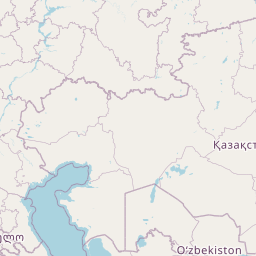
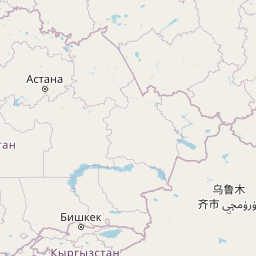
Genetic Density Heat Map
Ancestry concentration by geographic region
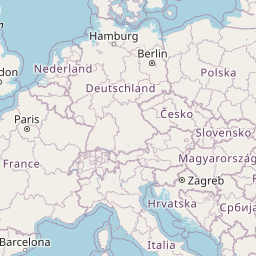
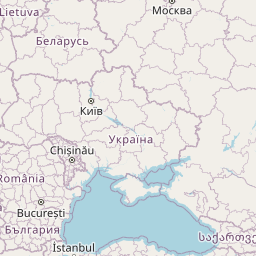

Intensity Scale
European PCA Genetic Plot
Principal Component Analysis — PC2 (x) vs PC1 (y) · your position marked in red
Phylogenetic Dendrogram
Sample — Carpathian Heritage · 10 populations · UPGMA clustering
Genetic Distance Reference
0.0182
Best Fit Distance
Closest Population: Rusyn
847
Reference Populations
Tested Against
25
Genetic Dimensions
G25 Coordinates
Dominant Ancestry
Your ancestry breakdown ranked by percentage
Carpathian Rusyn
The Rusyns, Lemkos, Boyko, Hutsul, and Dolinyan are mountain peoples who have lived in the Carpathian highlands for thousands of years. They are one of the oldest surviving communities in Eastern Europe, with a unique culture, language, and genetic identity that sets them apart from their neighbors.
total ancestry in region
Eastern European
Eastern European populations span the vast plains and river valleys from Poland and the Czech lands through Ukraine, Moldova, and Romania. Their DNA reflects deep Slavic roots shaped by medieval kingdoms, Cossack migrations, and centuries of demographic exchange.
total ancestry in region
Other
Populations from outside the primary genetic clusters.
total ancestry in region
About This Report
This report is based on autosomal DNA analysis using Global25 coordinates and Monte Carlo optimization with 10,000 iterations. Results represent genetic similarity to reference populations and should be interpreted as part of a broader understanding of ancestry. Genetic ancestry is complex and may not align perfectly with cultural, linguistic, or national identities. Best-fit distance of 0.01820 (Excellent quality) using euclidean metric.
G25 Precision
Industry-leading accuracy
Secure & Private
Your data stays yours
24–48hr Delivery
Fast turnaround
Expert Support
Real humans, real answers
Frequently Asked Questions
Everything you need to know before getting started
Ready to Uncover Your Roots?
Join thousands of people who have discovered their Carpathian heritage with Marleka Identity Labs.