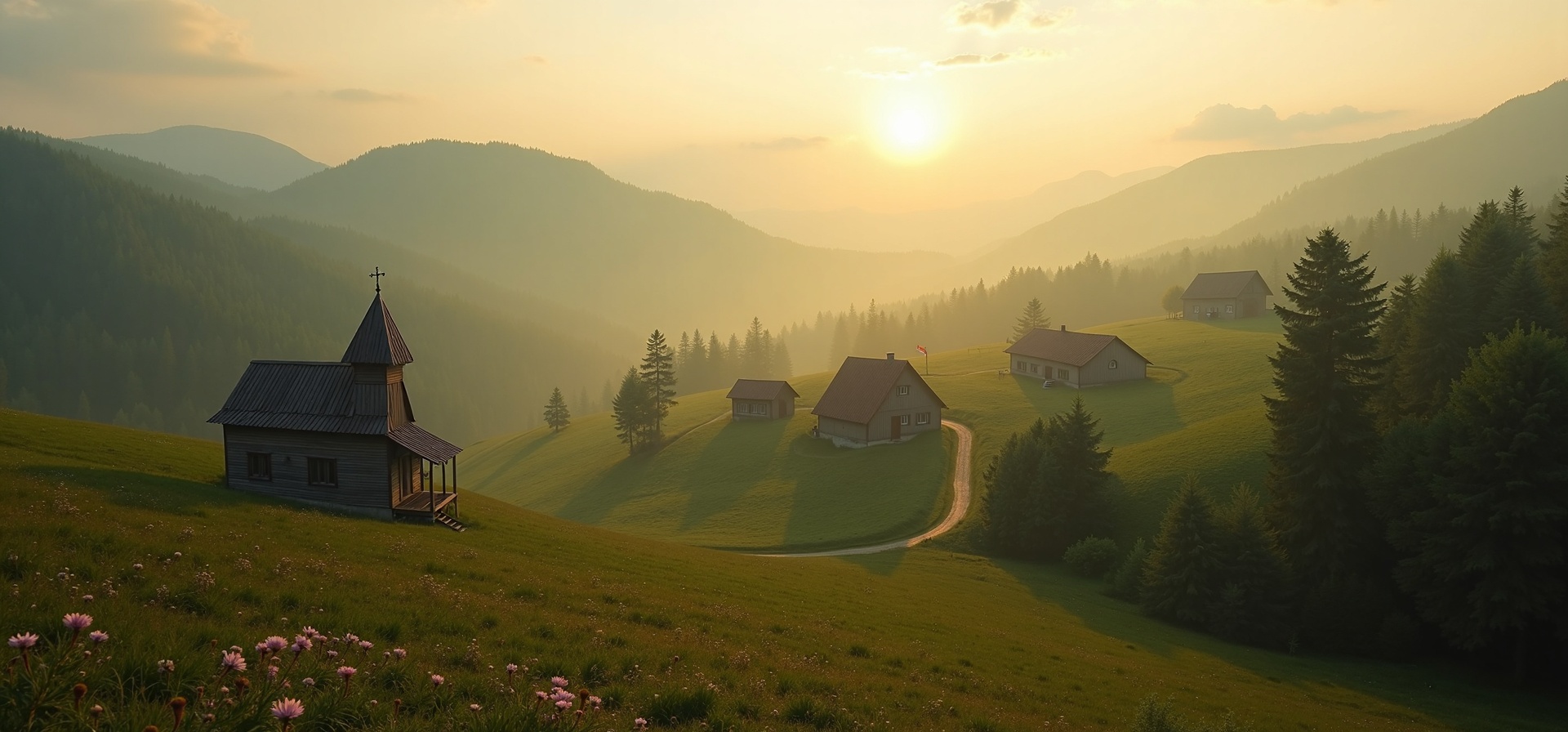
A Personal Journey
Finding Who We
Were Always Meant to Be
The story behind Marleka Identity Labs — born from a family that was told they were Russian, and a grandson who refused to let that be the end of the story.
Where It All Began
My Grandparents Called Themselves Russian
Like hundreds of thousands of Rusyns who immigrated to America in the late 19th and early 20th centuries, my grandparents arrived on these shores carrying a label that wasn't entirely their own. They said they were Russian — not out of deception, but because that was the identity handed to them by empires, borders, and a world that had no category for what they truly were.
The Rusyns — also known as Ruthenians, Carpatho-Russians, or Uhro-Rusyns — were a stateless people from the Carpathian highlands straddling modern-day Slovakia, Poland, and Ukraine. Under Austro-Hungarian rule, under Soviet influence, and later under communist regimes, their distinct identity was systematically suppressed, absorbed, or simply erased from official records.
When they arrived in Pennsylvania, Ohio, New Jersey, and Minnesota — working in the coal mines and steel mills — they joined Greek Catholic parishes, formed fraternal organizations, and quietly preserved their culture. But to the outside world, and eventually to their own grandchildren, they were simply "Russian."
The American Diaspora
Where Rusyns Settled in America
Between 1880 and 1920, an estimated 500,000 Rusyns emigrated to the United States. They clustered in industrial towns where labor was needed — coal mines, steel mills, and iron foundries. These communities, though largely forgotten today, were once vibrant centers of Rusyn culture, language, and Greek Catholic faith.
Pennsylvania
Largest concentration
Home to the largest Rusyn population in the Western Hemisphere. The coal and steel industries of western and northeastern PA drew Rusyns by the hundreds of thousands.
Ohio
Steel country
The Mahoning Valley and greater Cleveland area became major Rusyn hubs, drawn by the steel industry. The Greek Catholic Church of the Annunciation in Cleveland was a cornerstone community.
New Jersey
Industrial northeast
Northern New Jersey's textile and manufacturing towns attracted Rusyn immigrants who formed tight-knit communities anchored by Byzantine Catholic parishes and fraternal lodges.
New York
Gateway city
Many Rusyn immigrants passed through New York and stayed, particularly in the Hudson Valley and upstate manufacturing cities. The Lemko Association of the USA was headquartered in New York.
Minnesota
Iron Range
The Iron Range of northern Minnesota was a powerful draw for Rusyn laborers. The Mesabi Iron Range towns have Rusyn surnames woven into their local histories and church records to this day.
CT, MI & Beyond
Scattered communities
Smaller but established Rusyn communities took root throughout New England and the Great Lakes region, following manufacturing work and family networks across state lines.
If your family came from any of these cities, there's a meaningful chance of Rusyn ancestry — even if your relatives identified as Russian, Slovak, or Ukrainian. Greek Catholic and Byzantine Catholic church records in these towns are among the best genealogical resources available for tracing Rusyn roots.
The Awakening
I Was 20 Years Old When I Found Out the Truth
Growing up, I knew I had Eastern European roots. My family said Russian. The big-box DNA tests confirmed it — Eastern European, they said. No mention of Rusyn. No mention of Lemko. No Hutsul, no Boyko. Just a broad, generic label that told me nothing about the specific mountain people I actually came from.
It wasn't until I was 20 years old, deep in genealogy research — tracing church records, immigration manifests, and village names — that I discovered the truth: my family were Lemko Rusyns, from the village of Becherov, Slovakia, nestled in the Carpathian highlands near the Slovak-Polish border. A people with their own dialect, their own traditions, their own tragic history of displacement and political erasure under successive empires and communist regimes.
That discovery changed everything. It wasn't just a label — it was an entire world that had been hidden from me. And I knew I wasn't alone.
The Problem
"Eastern European" Is Not an Answer
For millions of people with Rusyn, Lemko, Hutsul, and Boyko ancestry, mainstream DNA tests have consistently failed to reflect their true heritage. Here's why.
Underrepresented Reference Panels
Companies like 23andMe and AncestryDNA build their ethnicity estimates from reference populations. Rusyns — a stateless people with no modern nation-state — are almost entirely absent from these panels. Their DNA gets absorbed into broader "Eastern European" or "Ukrainian" categories.
Borders That Erased Identity
Rusyn lands have been divided between Slovakia, Poland, and Ukraine for over a century. Depending on which side of the border your ancestors came from, they were classified as Slovak, Polish, or Ukrainian — never Rusyn. This political erasure directly impacts how DNA companies categorize their results.
Self-Identification Gaps
Many Rusyns in the diaspora — especially in the United States — were raised identifying as Russian, Slovak, or Ukrainian. When they submit DNA samples to testing companies, they don't self-identify as Rusyn, which further shrinks the reference pool and perpetuates the cycle of misidentification.
"There are an estimated 1.5 to 2 million people of Rusyn descent in the United States alone — most of them don't know it. They were told they were Russian. Their DNA tests confirmed nothing. We built this platform to change that."
— Founder, Marleka Identity Labs
Our Mission
Built for the Misidentified
Marleka Identity Labs was created specifically for people like me — and like my grandparents. People whose DNA tests returned vague, generic results that told them nothing meaningful about their true Carpathian heritage.
Using G25 coordinate analysis — a cutting-edge population genetics method that plots your DNA against hundreds of reference populations — we've built calculators specifically tuned to distinguish between Lemko Rusyn, Hutsul, Boyko, Pannonian Rusyn, and neighboring populations. This level of granularity simply doesn't exist anywhere else.
Our tools are free, open, and built with one purpose: to give Rusyns — wherever they are in the world — the ability to see themselves clearly in their own DNA for the very first time.
Who This Is For
You Might Be Rusyn and Not Know It
If any of these sound familiar, this platform was built for you.
Your family said they were "Russian" but came from Slovakia, Poland, or western Ukraine
This is one of the most common signs of Rusyn ancestry in the American diaspora. The Austro-Hungarian empire classified Rusyns as "Greek Catholic Russians" on immigration documents.
Your DNA test shows "Eastern European" with no specific Rusyn, Lemko, or Carpatho-Rusyn result
Big-box tests don't have Rusyn in their reference panels. Our G25 calculators do — and they can distinguish between Lemko, Hutsul, Boyko, and Pannonian Rusyn subgroups.
Your ancestors attended a Greek Catholic or Byzantine Catholic church in America
The Greek Catholic church in America was built almost entirely by Rusyn immigrants. If your family attended one of these parishes, there's a strong chance of Rusyn heritage.
Your family came from villages in the Prešov Region, Subcarpathia, or the Lemko Region
These are the historic Rusyn homelands. Villages like Becherov in the Bardejov district of Slovakia were home to Rusyn communities for centuries. If your genealogy research points to these areas, our calculators can help you understand exactly which Rusyn subgroup you descend from.
The Technology
Innovative Tools for Specific Results
We didn't build another generic ancestry calculator. We built something specifically designed to resolve the identity questions that mainstream testing leaves unanswered.
G25 Coordinate Analysis
G25 (Global 25) is a principal component analysis method developed by population geneticist Davidski. It plots your DNA across 25 dimensions against hundreds of ancient and modern reference populations — giving far more resolution than commercial tests.
Rusyn-Specific Reference Panel
We've curated a dedicated reference panel of verified Lemko, Hutsul, Boyko, and Pannonian Rusyn samples — populations that simply don't exist in commercial testing databases. This is what makes our results different.
Monte Carlo Simulation
Our Monte Carlo engine runs thousands of statistical simulations to find the most accurate population mixture that explains your G25 coordinates — providing confidence intervals and detailed breakdowns no commercial test can match.
Join the Community
Your Ancestors Knew Who They Were.
Now You Can Too.
Whether you're just beginning your genealogy journey or you already have your G25 coordinates in hand, our tools are here to help you find the specific Rusyn heritage that mainstream tests have always missed.